
 Top Pick
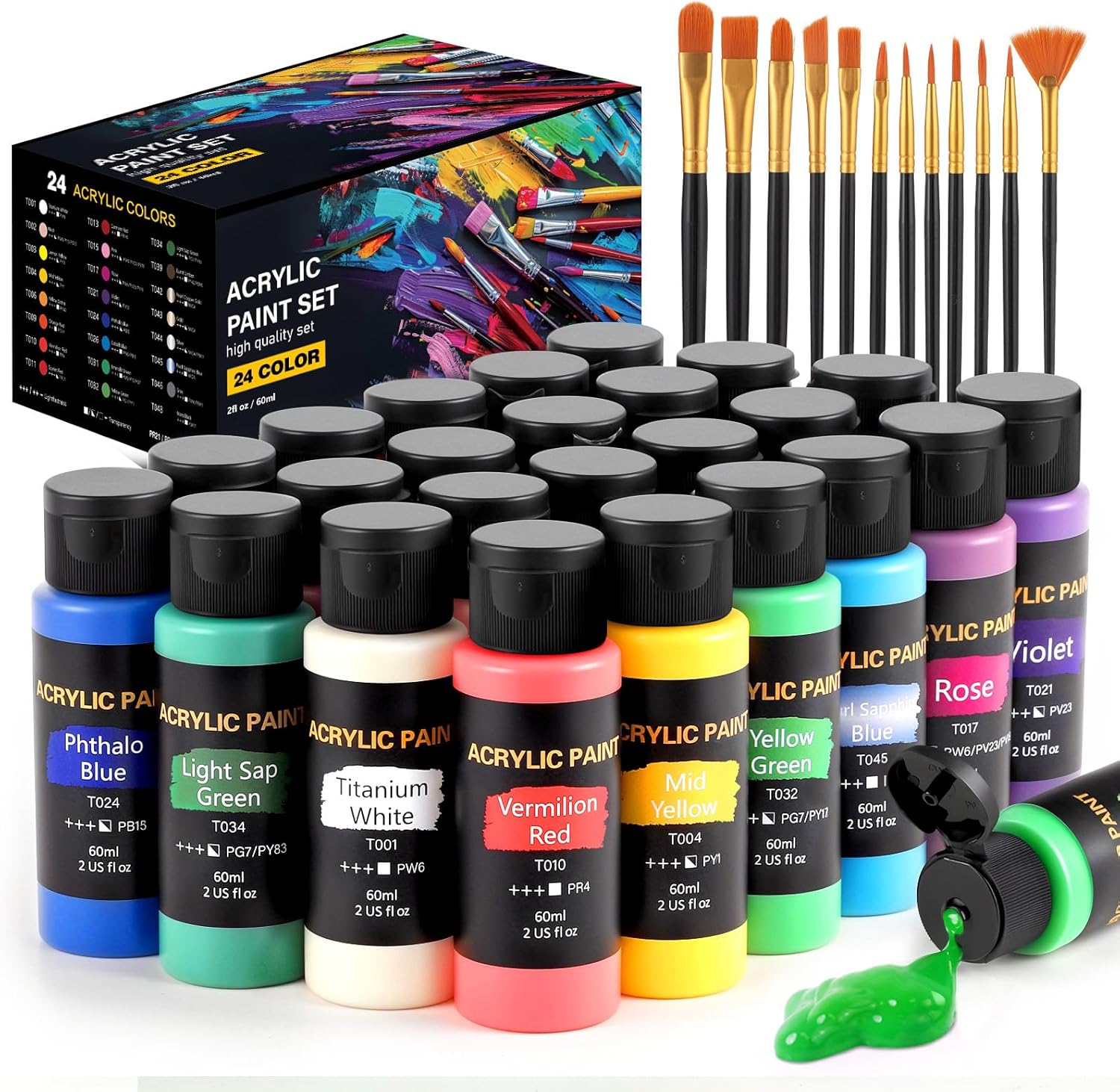
Listing title: TMOL Acrylic Paint Set, 24 Colors (2 oz/Bottle) with 12 Art Brushes, Art Supplies for Painting Canvas, Wood, Ceramic & Fabric, Rich Pigments Lasting Quality for Beginners, Students & Professional Artist
AcrylicProfessional
TMOL Acrylic Paint 24 Colors
4.6/ 5
2,100 reviews
Pieces
24
Twenty-four 2 oz bottles of rich acrylic paint plus twelve brushes for canvas, wood, ceramic, and fabric. Suited for beginners through professionals.
What's included
- 24 colors, 2 oz per bottle
- Includes 12 art brushes
- Canvas, wood, ceramic, fabric
- Rich pigments, lasting finish
Buy on Amazon
Price and availability are shown on Amazon. We may earn a commission from qualifying purchases.
Deep dive
In-depth overview
Editorial notes on use cases, care, and classroom ideas — not a copy of the retailer listing.
TMOL’s acrylic paint bundle speaks to a familiar dilemma: you want enough pigment to actually finish a canvas panel, but you also want brushes that do not feel like afterthoughts. Twenty-four two-ounce bottles sit in a practical range for beginners who paint weekly and for students completing structured assignments without constantly rebuying tiny tubes. Including a dozen brushes signals an intent to cover multiple marks—from broad blocking-in strokes to modest detail—without forcing an immediate second purchase. That matters when motivation is fragile; friction kills momentum faster than imperfect technique.
Canvas remains the default imagination surface, yet acrylic’s versatility is the real story. Wood signs, ceramic bisque when processes allow, fabric experiments with appropriate additives, and mixed-media collages all appear in real studios. Acrylic dries quickly compared to oils, which helps layering but punishes hesitation. Keep a misting routine only if compatible with your brand guidance; some beginners overwater and wonder why adhesion suffers. Palette discipline also changes outcomes: clean mixing areas keep chroma crisp, while muddy puddles steal vibrancy from every passage.
For beginners, a structured first month beats a chaotic first weekend. Week one: monochrome value studies. Week two: limited palette still life. Week three: simple landscape with big shapes. Week four: personal subject with one risky texture experiment. Students benefit from photographing stages; teachers benefit from seeing process, not only finals. Professionals sometimes keep student-grade sets for underpainting or large filler passages, reserving premium pigments for top layers where light interaction matters most.
Color mixing exercises also teach restraint: a limited subset of bottles can produce surprising neutrals when you practice muddying on purpose, then rescue chroma with a clean brushload. If you film content, wipe bottle threads before closing so the “satisfying click” moment does not become a stuck cap blooper.
Inventory nerds can keep a spreadsheet column for “first opened date” on each hue; oxidation and evaporation change handling over years even when bottles look full. If you paint miniatures, toothpicks and drybrush techniques extend tube life dramatically compared with flooding panels.
Brush care extends the economic value of any bundle. Rinse thoroughly, reshape damp bristles, dry flat or hanging depending on fiber type, and never leave brushes standing on their tips in water jars. If a brush sheds early, document it calmly; manufacturing variance exists, but abuse is common too. Storage that protects ferrules from impact prevents mysterious “crooked tip” problems that frustrate teens during exam week.
If you paint with others, designate a “wet brush” jar and a “rinse only” jar to slow muddy contamination. Photograph successful mixing ratios on palette paper with bottle numbers circled; reproducibility beats memory. When you store partially used bottles, wipe threads so caps seal; acrylic skins in the cap can make reopening a drama nobody needs before school drop-off.
Safety stays grounded in basics: ventilation for long sessions, skin habits that avoid constant paint contact, and age-appropriate supervision when younger siblings wander into the workspace. Read the manufacturer’s guidance for your specific batch rather than trusting forum shorthand. Affiliate links help sites fund comparisons, but your studio habits determine whether paint becomes a lasting companion or a half-used shelf story. Choose a schedule, protect brushes, and let twenty-four colors be enough to learn color relationships deeply before chasing infinite tubes.
Related
You may also like
Same category picks when available; otherwise popular alternatives from the catalog.