
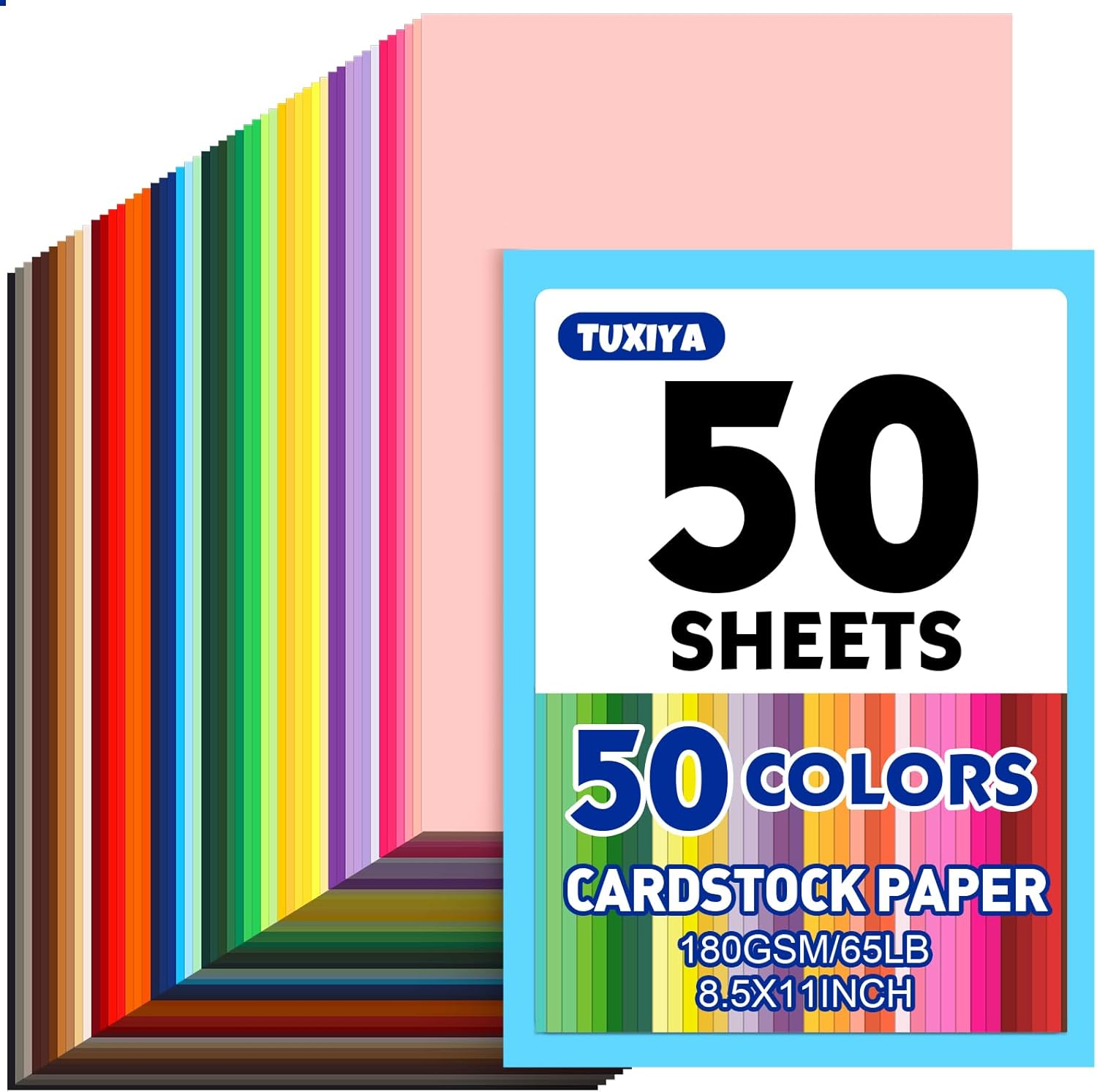
Listing title: 50 Sheets 8.5" X 11" Colored Cardstock, 50 Assorted Colors Construction Paper Card Stock Printer Paper for Printing, Card Making, DIY Crafts,School Supplies,Party Decorations (180GSM/65LB)
PaperHobbyist
50 Sheet Colored Cardstock 8.5×11
4.7/ 5
3,200 reviews
Pieces
50
Fifty sheets of 8.5×11 assorted-color cardstock at 180 gsm / 65 lb—ideal for printing, card making, school projects, and party decor.
What's included
- 50 sheets, 50 colors
- 8.5" × 11" letter size
- 180 gsm / 65 lb weight
- Cards, crafts, school, parties
Buy on Amazon
Price and availability are shown on Amazon. We may earn a commission from qualifying purchases.
Deep dive
In-depth overview
Editorial notes on use cases, care, and classroom ideas — not a copy of the retailer listing.
Fifty sheets of eight-and-a-half by eleven cardstock in fifty assorted colors sounds like a rainbow challenge and an organizer’s dream at once. Cardstock supports card-making, paper sculpture prototypes, school posters, and die-cutting hobbies where flimsy printer paper collapses. At one-eighty gsm and sixty-five lb labeling, think sturdy but not bulletproof: scoring before folding reduces cracks; sharp blades reduce tearing along edges.
Printer compatibility is a research task, not a guess. Feed paths, rollers, and ink or toner types all interact with heavier sheets. Start with one-sheet test prints before running a fifty-page batch for party invitations. If you cut on machines, check blade depth and mats; dull blades feather edges. Storage flat under boards prevents curling; humidity swings warp stacks.
Color assortment invites teaching moments: complementary pairs, warm versus cool families, and value sorting without hue bias. If you run a classroom, label leftover pieces by color family in envelopes to reduce waste. For party decor, photograph layouts before assembly so you can reproduce next year.
Silhouette and Cricut users should log blade settings per color batch; dye lots shift subtly and can affect kiss-cut depth. If you build paper toys, dry-fit tabs before glue; cardstock forgives less than thin paper once creased wrong. For science fair boards, plan overlap cuts so seams land behind title strips rather than across focal photos.
Recycling and disposal depend on local rules when mixing foils or adhesives later. If you spray seal finished cards, do so in ventilated areas away from pets. When you store scraps, clip them to a ring sorted by hue family; future card fronts emerge faster from organized scraps than from a chaotic tub.
Affiliate links help readers find paper; your blade sharpness, printer honesty, and storage flatness determine whether cardstock feels professional or frustrating. Test feeds, score folds, and let fifty colors be a curriculum in contrast and structure rather than a pile that intimidates you into using only white and blue.
If you laser-cut cardstock, confirm kerf width on scrap; fifty colors mean nothing if tabs no longer interlock. When you teach pop-up cards, score with a bone folder before folding; cracked fibers telegraph instantly on saturated sheets. If you design classroom election posters, print candidate names on separate strips so typos do not trash entire backgrounds. When you store holiday ornaments made from cardstock, box them flat with silica; attic heat can delaminate layered pieces. If you prototype packaging dielines, label interior faces with pencil lightly before cutting; assembly errors drop when orientation is obvious. If you teach typography on paper, print baseline grids on separate sheets and overlay; cardstock tolerates light tables better than flimsy bond. When you build paper engineering demos for clients, photograph failure modes on purpose; credibility rises when you show how you recover from mis-scores. If you run maker camps, rotate blade duties so one volunteer does not dull communal cutters silently. When you design wedding place cards, test feed on your printer with one fancy sheet before burning fifty. If you collaborate with illustrators, sync RGB versus CMYK expectations early; saturated cardstock scans tempt oversaturated screens.
If you teach paper sculpture, assign a “compression test” column in critiques; crush resistance matters for shipping more than classroom display.
Related
You may also like
Same category picks when available; otherwise popular alternatives from the catalog.

